One Building, Three Loan Sizes: The Income a Lender Will Actually Count in 2026
The same completed block can support very different debt depending on who reads its income. A 2026 read on why a lender counts unit rents, trading nights and a lease covenant so differently, and why that decides the loan long before the interest rate does.
One Building, Three Loan Sizes: The Income a Lender Will Actually Count in 2026
Take one newly completed building and walk three different lenders through it. Same postcode, same bricks, same practical completion certificate. Ask each what it will lend, and you can get three answers that are a long way apart. The reason is not that one lender is braver than another. It is that they are each counting a different income, because the building can be run in more than one way, and the way it is run decides what a lender is willing to treat as real.
That gap, between what a building could earn and what a lender will count today, is the whole business of stabilisation finance. We are a broker and an introducer, and our job is to read a completed asset the way the funders read it, then place it with the camp whose reading gives the owner the most usable debt. If you want that read on a specific scheme, start with Stabilisation Finance.
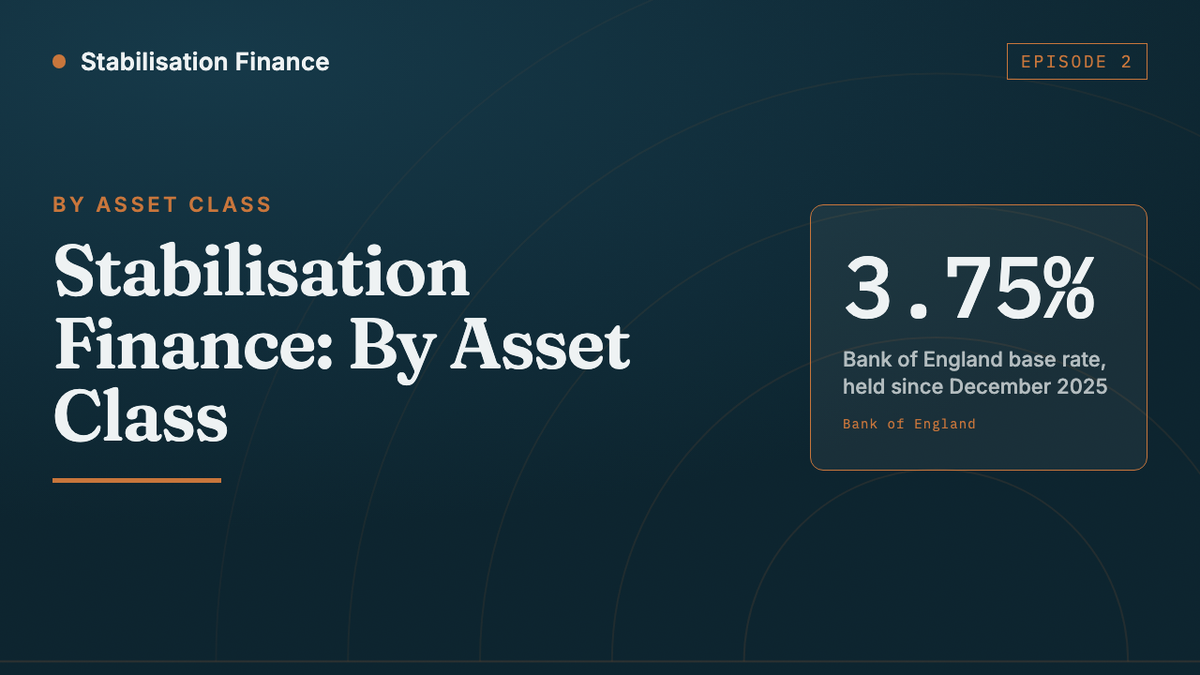
Compliance note. Stabilisation Finance is a trading name of Lenzie Consulting Ltd, and we arrange and place finance rather than lend it. Stabilisation Finance is not authorised by the Financial Conduct Authority (FCA). The lending we arrange is unregulated commercial lending, and where a deal carries a regulated element we refer it to an appropriately regulated firm. Every figure below is indicative market commentary for 2026, not an offer. The Bank of England base rate is 3.75 percent, held since the December 2025 cut.
Why the income basis, not the address, sets the loan
A term lender wants a settled income it can capitalise. A stabilisation lender is looking one step earlier, at a building that has reached completion or is part let and has not yet arrived at that settled number. The question it is really asking is simple to state and hard to answer: what income can I count now, and how credible is the path to the income you are promising me.
Answer that well and the loan gets sized generously against the path. Answer it loosely and the lender retreats to what it can see on the day, which is usually a smaller number. The building does not change. The income basis does, and with it the loan.
That is why the same asset produces three different loan sizes. Below are three readings of one completed block, each grounded in how the market actually treats that income in 2026.
Reading one: multi unit rents, counted unit by unit
Run the block as separate self contained flats on their own tenancies and you are in familiar territory for a lender. Income arrives as unit rents, each on an assured shorthold, and the lender counts the passing rent as flats fill, net of a void allowance, management and the running costs of the common parts. This is the multi unit freehold block route, and it is the reading that gives the cleanest path to a term exit.
During lease-up the loan sits indicatively up to 65 to 75 percent of value, interest-only or rolled while occupancy builds, on a 12 to 24 month term that covers the fill-up. The lender is comfortable because residential unit demand is deep, the income is granular, and one empty flat is a rounding error rather than a hole. When the block is fully let, a senior investment term loan takes over on the stabilised rent roll, and the stabilisation debt is repaid. Of the three readings, this is the one where the promised income and the counted income converge fastest.
Reading two: serviced accommodation, counted as trading nights
Now run the same building as short-stay serviced accommodation. The rooms are the same rooms, but the income is no longer a rent roll. It is trading income: nightly rates, occupancy that swings with the season and the local events calendar, cleaning and platform costs, and a management layer that a residential let never needs. This is the serviced accommodation route, and a lender counts it far more cautiously.
The reason is not snobbery about the model. It is that trading income is more volatile and more operator dependent than a signed tenancy, so a lender discounts it harder and wants a longer, evidenced run of trading before it treats the stabilised figure as bankable. The product bands look similar on paper, short-dated debt indicatively up to 65 to 75 percent during the ramp, but the number the loan is sized against is a heavily netted, seasonally averaged figure, not the headline of a good August. Two identical buildings, one let on tenancies and one run as serviced accommodation, will not raise the same debt, because the counted income is not the same income.
Reading three: a lease covenant, counted as the tenant's strength
Run the block a third way, let in full to an operator on a long lease, and the reading changes again. Now the lender is barely looking at the rooms. It is looking at the lease and the covenant behind it: term, break, indexation, and whether the income is underpinned by a strong counterparty. Supported and assisted living sits here, where a single institutional tenant can carry the building. The market calls this an investment because that is the term the sector uses, and this is descriptive commentary, not a recommendation to invest in anything.
When the covenant is strong and the lease is long, this reading can support the keenest senior term debt of the three, because the lender is effectively lending against the tenant rather than the property's week to week performance. When the covenant is thin or the lease is short, it supports the least, because the income the lender is counting is only as good as the entity paying it.
The choice happens at the point of purchase
The uncomfortable part for a buyer is that this decision often has to be made before the building earns a penny. Choose the use at acquisition and you are choosing the income a lender will count for the whole hold, and with it the debt the asset will raise at every refinance down the line. A block bought to run as tenanted flats and a block bought to run as short-stay accommodation are the same purchase on the day, and two different financing lives afterwards.
That is why the finance question belongs in the buying decision, not after it. A buyer who works out which reading the market funds most generously, and buys with that use in mind, is sizing the eventual debt at the point of purchase. A buyer who fixes the use first and asks about finance later is often surprised by how much the lender discounts the income they had counted on. The building was never the variable. The plan for its income was.
The pattern, and why it matters before you fix the rate
Three readings, three loan sizes, one building. The interest rate barely entered the argument, and that is the point owners most often miss. Borrowers arrive focused on price, when the decision that moves the most money is which income a lender agrees to count and how much of it. Get the income basis read correctly at the outset and the loan is sized against the strongest defensible version of the asset. Get it wrong and you leave usable debt on the table before anyone has quoted a rate.
That read is the arrangement job. We look at how a completed asset is actually run, or could be run, work out which funding camp reads that income most generously, and place it there. Specialist real estate debt funds and bridging lenders take the ramp; challenger banks and senior investment lenders take the stabilised, well let result. If you are holding a completed or part let building and want to know which of its incomes will raise the most debt, that is a conversation for the stabilisation desk before you commit to how you run it.
Written by Matt Lenzie. General information on UK property finance, not regulated advice.